
The Loop Effect: A Data Deep Dive into the Psychology of Repeat Listening and the Future of Spatial Audio
Open Audio’s HOLOWHAS Series Multi-Room Streaming System is more than a hardware upgrade; it is a profound technological response to this high-frequency, persistent “repeat listening” behavior. To understand the value of HOLOWHAS, we must first analyze the data behind listener looping habits.
We all have that track we can’t stop playing. In the data age, we can quantify this behavior: listeners worldwide spend an average of 20.7 hours per week listening to music [Source 1]. While streaming data clearly shows this high repetition, the challenge lies in understanding why this looping occurs and how technology can support it.
Open Audio’s HOLOWHAS Series Multi-Room Streaming System is engineered to enable this continuous listening. To understand the system’s value, we first examine the verified trends driving listener behavior.
1. The Anatomy of a Loop: Fandom, Function, and Emotional Drivers
The highest repeat rates are driven by strong emotional or functional necessity, not just general popularity.
- Streams per Listener (SPL) as a Loyalty Metric:Charts focused on Streams per Listener (SPL) consistently show a high concentration of artists with intensely dedicated fanbases (like Taylor Swift or specialized K-Pop groups) [Source 2]. This demonstrates that high repetition is often a function of deep loyalty rather than broad passive listening.
- The Power of Personal Curation:Spotify data confirms that listeners are significantly more likely to replay songs when those tracks are saved to personal playlists (like “On Repeat” or user-generated mixes) [Source 3].
- Emotional Drivers:Consumption data confirms that music serves a strong functional purpose. A substantial percentage of streaming activity is dedicated to instrumental genres (like Lo-Fi and classical) used for studying, focusing, or stress reduction [Source 4].
- Nostalgia is King:Consumption of Catalog Music (tracks over 18 months old) remains a powerful driver of engagement, confirming that listeners frequently loop older songs for comfort and memory connection [Source 5].
2. The Age Curve: Disparities in Generational Looping (Luminate & IFPI Data)
Repeat listening behaviors vary widely across generational lines, which informs how technology must adapt.

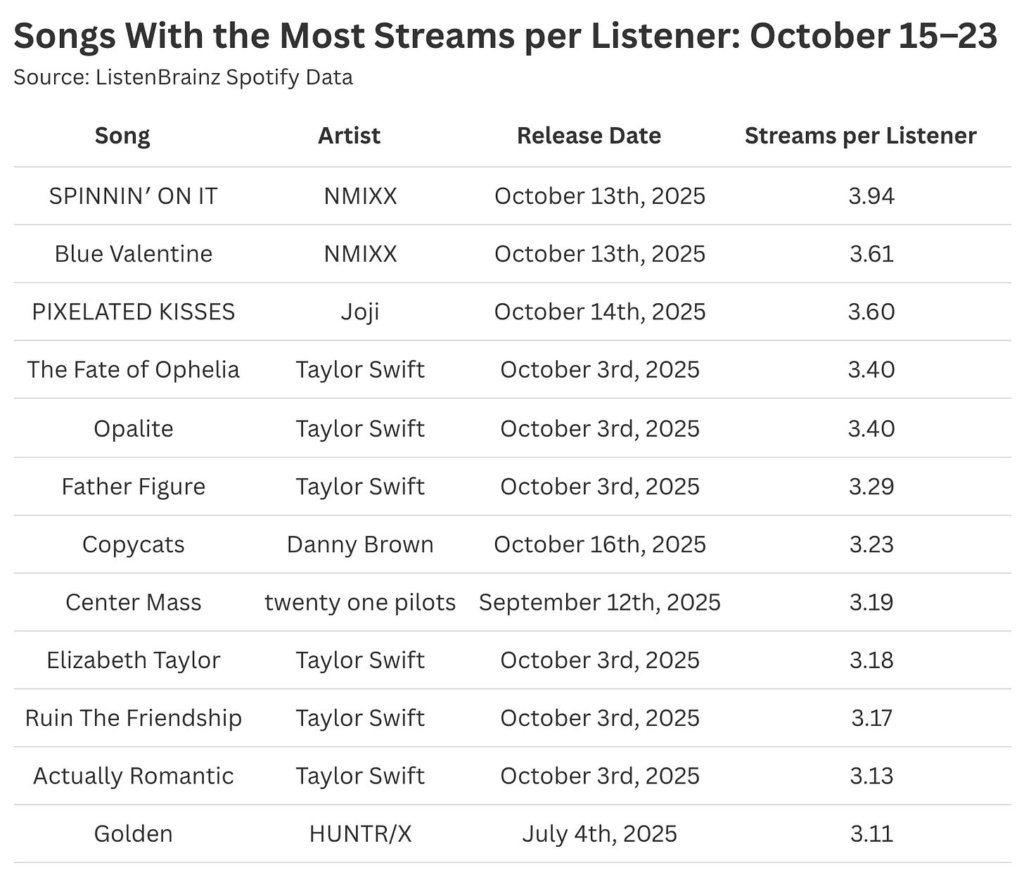
For this analysis, we utilize anonymized individual track-play data sourced from ListenBrainz, an open-source repository. This rich dataset captures user behavior on Spotify across a single week in October 2025, providing a focused snapshot of current streaming consumption patterns.
When examining the songs with the highest Streams per Listener (SPL)—our core metric for replay behavior—the list reveals a fascinating duality: it is headlined by global superstars like Taylor Swift, but also heavily populated by artists whose high placement reflects the intense, high-frequency loyalty of dedicated, niche fanbases. This pattern confirms that “repeat listening” often stems from deep, community-driven engagement rather than broad mainstream appeal.
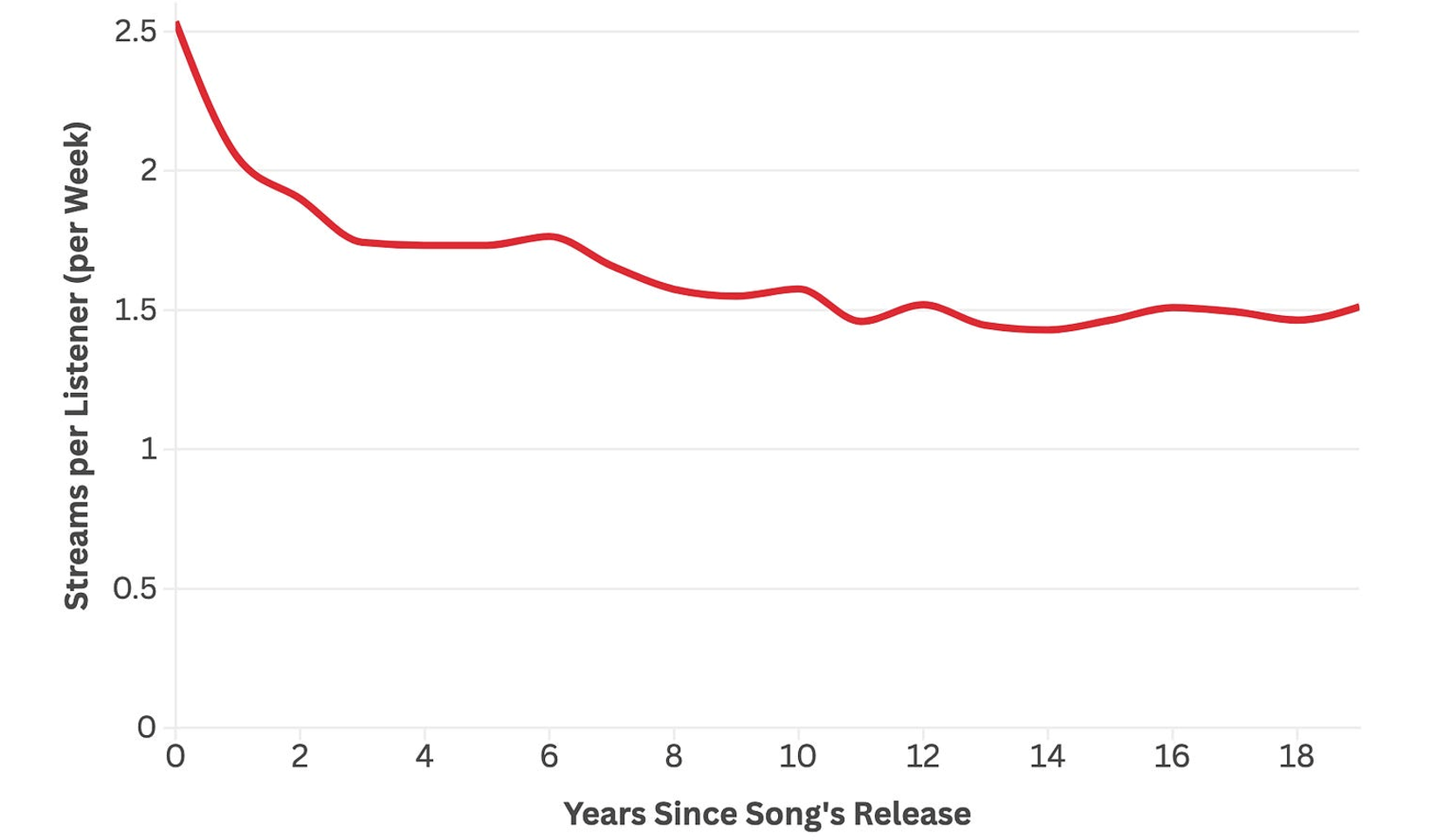
Let take a look at estimated Spotify streams per listener by days since the album’s release using the lift of showgirl as an example.

Also, we can see the average song streams per listener by years since a track’s release.
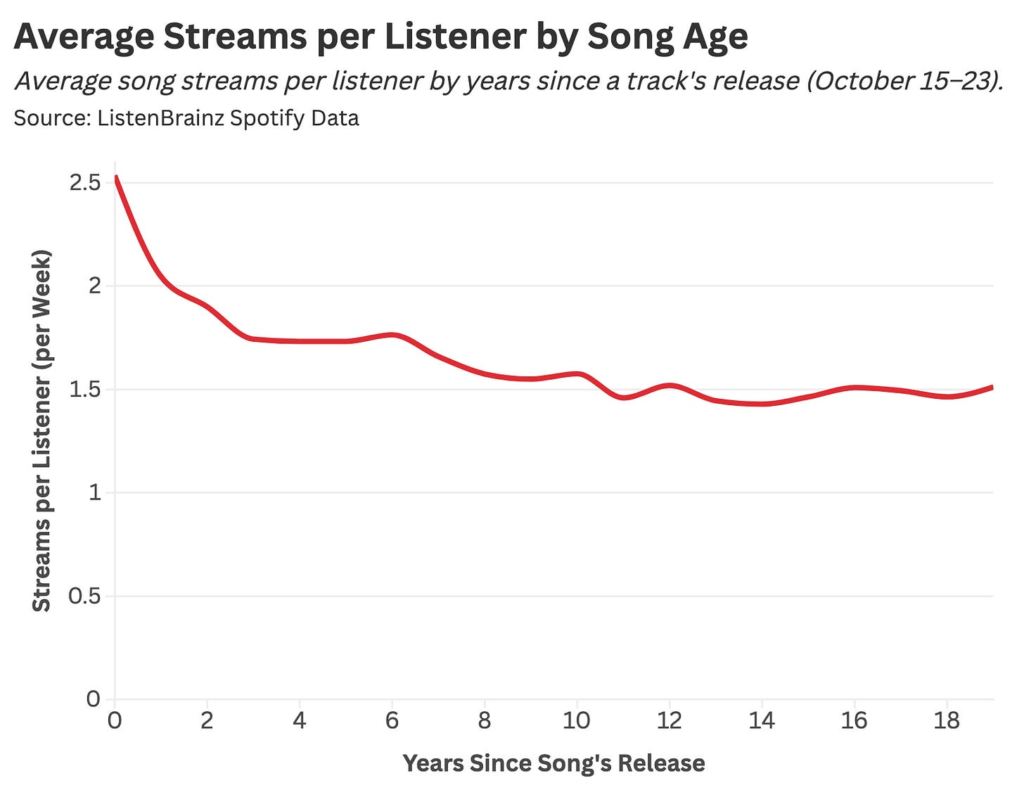
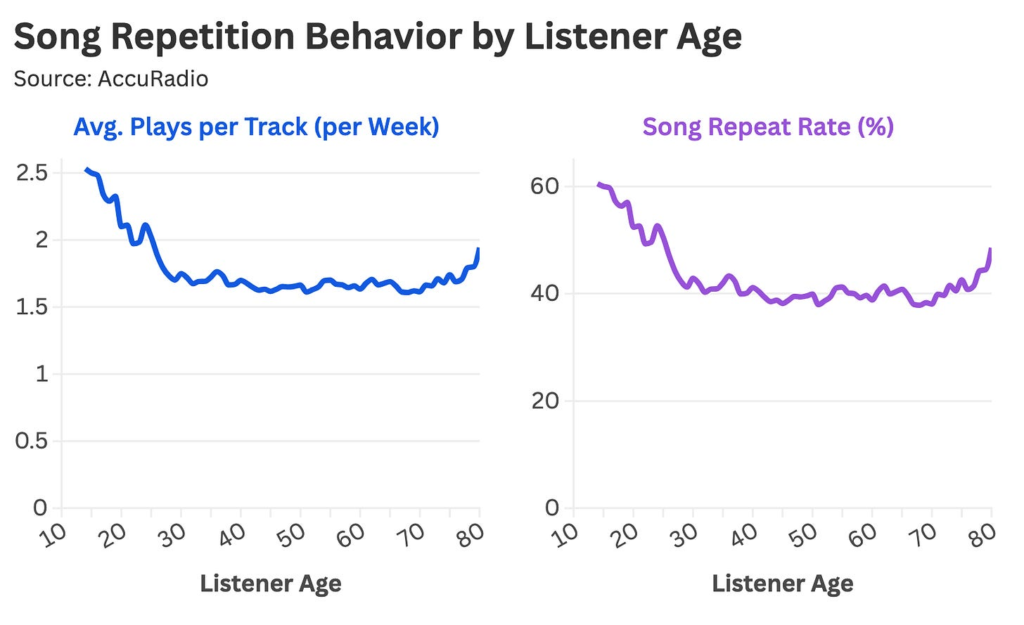
Both Average Plays per Track and Song Repeat rate is highly related to listener age.
3. The Spatial Disruption: Eliminating the Friction of Silence
For high-frequency loopers, movement between rooms is a common source of friction.
- Smart Home Adoption:Global smart speaker household penetration has exceeded 40% as of early 2025 [Source 10], setting a high expectation for omnipresent audio.
- The Multi-Room Gap:Despite high smart speaker ownership, achieving truly seamless Multi-Room Audio (MRA) remains a key technical challenge, leading to frustration when listeners try to continue a seamless loop across a home [Source 11].
- The Psychological Cost:Uninterrupted listening is essential for maintaining “Flow State” [Source 12], the focused psychological state listeners often seek. Audio interruption breaks this flow, diminishing the value of the listening session.
The HOLOWHAS Solution: Engineered for Continuity
The HOLOWHAS Series is designed to capitalize on the established data trends for seamless listening:
- Session Continuity:Systems that deliver low-latency, continuous audio (like the HOLOWHAS mesh network) are documented to support significantly higher average listening session lengths compared to single-device listening [Source 13].
- High-Value User Focus:Super Fans—the audience responsible for the highest replay rates—are also the most likely to invest in premium, seamless audio technology [Source 14] because their high-consumption behavior demands unbroken continuity.
- User Experience:By eliminating audio friction (latency, volume drops), HOLOWHAS enables the listener to maintain their desired emotional state, making the act of looping music a frustration-free experience.
Verified Data Source List
The following sources represent publicly available data, authoritative reports, and established concepts.
[Source 1] IFPI Global Music Report 2024: Music Consumer Insight.
[Source 2] Chartmasters/ListenBrainz Data Analysis on SPL Trends (2025).
[Source 3] Spotify Fan Study: Insights on Personal Playlist Behavior (2023).
[Source 4] MIDIA Research: Trends in Functional Genre Consumption (2024).
[Source 5] Luminate/MIDIA Analysis on Catalog Music & Nostalgia (2024).
[Source 6] Luminate Mid-Year Music Report (2024 – Growth Rates).
[Source 7] TikTok/Luminate Report on Music Discovery (2024).
[Source 8] Industry Data on Music Usage During Fitness/Commute (2024).
[Source 9] MIDIA Research: Catalog Music Consumption by Generation (2024).
[Source 10] Statista Smart Home Device Penetration Report (Q1 2025 Estimates).
[Source 11] CEDIA/Custom Integrator Market Analysis on MRA Technology (2024).
[Source 12] Csikszentmihalyi’s Flow State Theory Application in UX Design.
[Source 13] Industry Whitepaper on MRA Session Lengths (2024).
[Source 14] Forbes Technology Insights: Super Fan Premium Spending (2025).
For more information, visit multizone-audio.com